
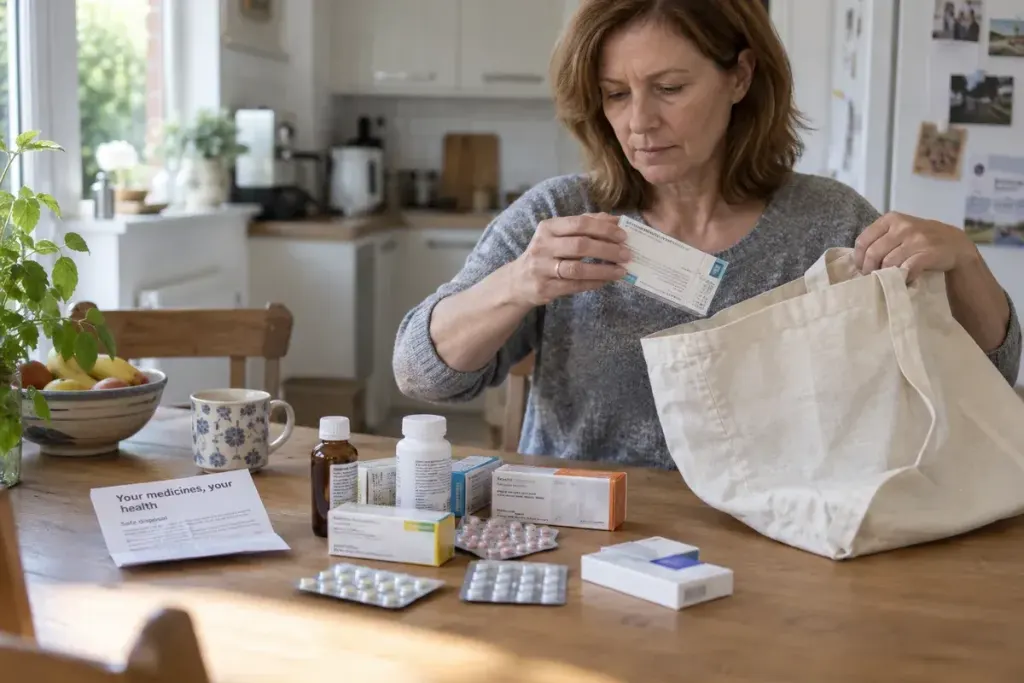
An unfinished packet at the back of a cupboard can outlast the reason it was prescribed. Keeping every leftover medicine “just in case” makes the cupboard harder to understand and can create opportunities for accidental use. Disposal deserves a little planning.
Do not stop a current treatment simply to clear space. If you are unsure whether a medicine is still needed, ask your pharmacist or prescriber. Separate that clinical question from the practical task of disposing of products you have already been told not to use.
Start with the local take-back route
Ask a pharmacy or local health authority which medicines they accept and how to bring them in. Rules differ between countries and collection schemes. The FDA’s information on medicine take-back options describes the US approach and explains why organised collection is a useful starting point.
Do not assume that tablets, liquid medicines, inhalers and needles all belong in the same bag. Sharps need an approved route and suitable container; some other products also require special handling. Confirm arrangements before travelling rather than leaving a mixed bag outside a pharmacy.
Keep the sorting process controlled
Work where children and pets cannot reach the products. Keep medicines identifiable while asking for advice, and do not combine loose tablets into an unlabelled container. Follow the collection service’s instructions about packaging and personal labels.
Protect personal information on paperwork or packaging when it is no longer required, but do not destroy identification that a pharmacist needs to resolve your question. Avoid posting readable prescription labels in online groups while asking what to do with a product.
- Set aside medicines clearly intended for disposal.
- Check uncertain items with a pharmacist.
- Confirm accepted products and opening arrangements.
- Store the prepared items securely until handover.
Do not use a blanket rule to flush medicines down a toilet or sink. Product-specific instructions and local guidance can differ, and an authorised take-back option may be available. Never give another person your leftover prescription medicine because their symptoms sound similar.
After the cupboard is organised, keep a simple habit of checking dates and removing items that no longer belong there. The objective is a smaller, understandable collection of medicines with a clear purpose, and a safe destination for everything else.