
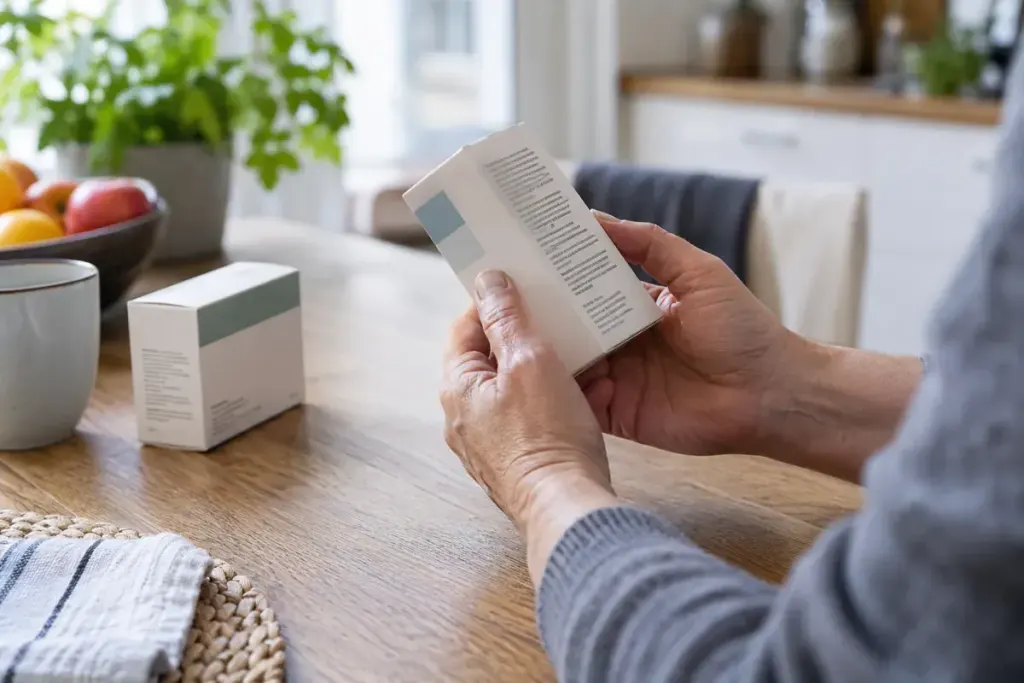
Two boxes can have different colours, different brand names and different promises on the front while containing the same active ingredient. That makes the ingredient panel an important place to look before combining over-the-counter products.
This guide is about reading information and preparing a pharmacy question. It does not determine whether a particular medicine or combination is suitable for you. A pharmacist or another qualified healthcare professional can assess that with your circumstances and other medicines in view.
Turn the packet around
Find the section listing active ingredients and their amounts. In the United States this appears within the Drug Facts label; the layout and terminology can differ elsewhere. Compare the actual ingredient names rather than relying on the symptom words or brand family on the front.
The MedlinePlus information on dextromethorphan warns that non-prescription cough and cold products can share active ingredients, creating a risk of overdose when combined. It advises checking labels and asking a doctor or pharmacist which product is suitable. This example illustrates why the full ingredient information matters.
Make the question concrete
Instead of asking whether two colours of box can go together, show the pharmacist the full packages or clear images of all relevant label panels. Include the names and instructions of medicines you already use. A cropped promotional picture may leave out the very information needed to answer.
For an illustrative comparison, call the packets Product A and Product B. Write their ingredient names on separate lines, then mark any exact match. A match is a reason to ask about the combination, not permission to calculate your own alternative schedule. Different names or amounts do not automatically make two products compatible either.
Include the context that changes the answer
Tell the professional who the medicine is for, what else they take and any relevant health circumstances. Mention supplements and non-prescription products as well as prescriptions. Do not assume a product is suitable for a child because an adult has used the same brand.
If label text is too small, ask for help reading it or for accessible information. Check the full product name and formulation so the advice applies to the item in your hand. Brand names and formulations can differ between countries and change over time.
Keep the instructions with the product
Once you have appropriate advice, retain the packaging and follow the directions you were given. Avoid combining products or changing an existing treatment based only on an online article. If instructions appear inconsistent, clarify them with the pharmacist or prescriber before improvising.
A brief note can make a later conversation easier: the product, the question, who answered and any written instructions supplied. Our medicine-list guide shows how to organise the wider information for that discussion. The useful habit is simple: read beyond the front of the box and make uncertainty visible before acting on it.