
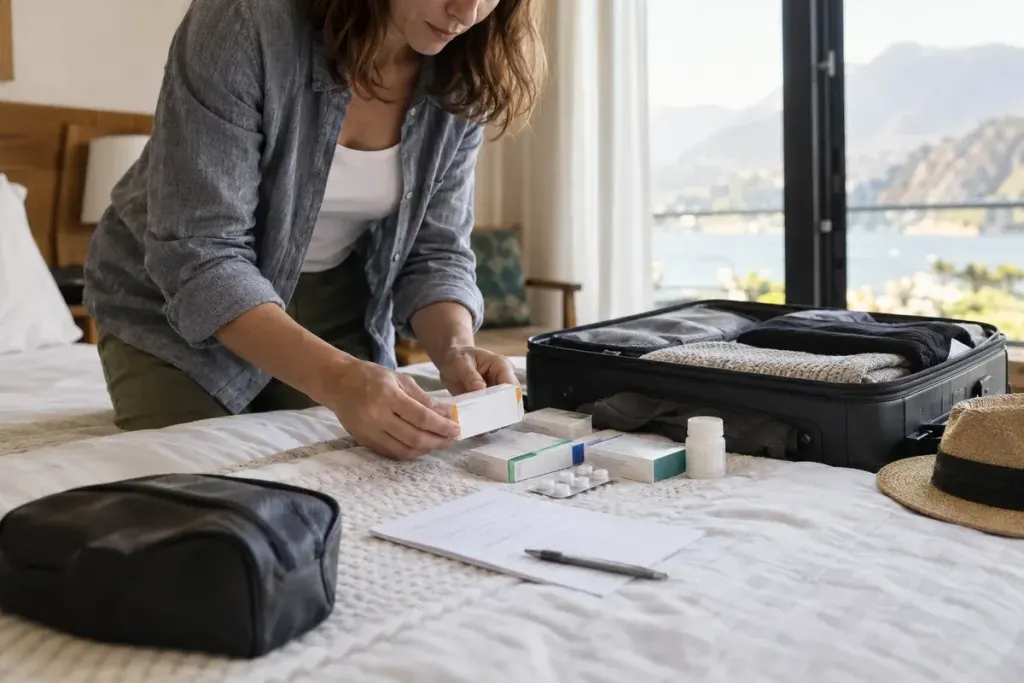
A small pill organiser saves space, but loose tablets can create questions at a border or when you need medical help abroad. The original label connects the medicine to its name, strength and dispensing information.
Travel preparation should begin early enough to check the destination’s rules and discuss practical concerns with your pharmacist or prescriber. Familiar medicines at home may be restricted elsewhere.
Check every country on the route
The CDC’s advice on travelling with medicines recommends original labelled containers and checking requirements before departure. Consider transit countries as well as the final destination, and consult their official authorities for current rules.
Do not assume that a prescription automatically permits import. Where documentation or approval is required, establish the process in advance. A travel blog’s successful journey is not evidence that the same medicine or quantity is permitted for you.
Prepare a readable medicine record
Keep an up-to-date list of names, strengths and prescribed directions, along with the relevant prescription or clinician’s letter where advised. Ask a pharmacist to help clarify generic names if brands differ internationally.
Store the record securely but accessibly. A companion may need to know where it is, without carrying unnecessary copies of your entire medical history. Keep labels legible and do not combine different medicines in one original container.
Resolve storage and timing questions at home
Some medicines have specific temperature requirements. Ask how to maintain those conditions during flights, transfers and accommodation stays. Do not assume a hotel minibar provides appropriate controlled storage.
Discuss time-zone changes and missed-dose questions with your pharmacist or prescriber before travel. The answer depends on the medicine and your circumstances; changing doses based on a general travel article is not appropriate.
Plan for delays without improvising treatment
Arrange a suitable supply within the destination’s permitted limits and keep essential medicines accessible in accordance with transport rules. Check the carrier and security authority’s requirements for liquids, devices or cooling equipment where relevant.
If medicine is lost or damaged, use a legitimate healthcare service rather than buying an unfamiliar substitute from an unverified seller. The CDC Yellow Book discussion of restricted medicines provides further context. A little documentation before departure makes the conversation with a pharmacist, border official or clinician much clearer if plans change.