
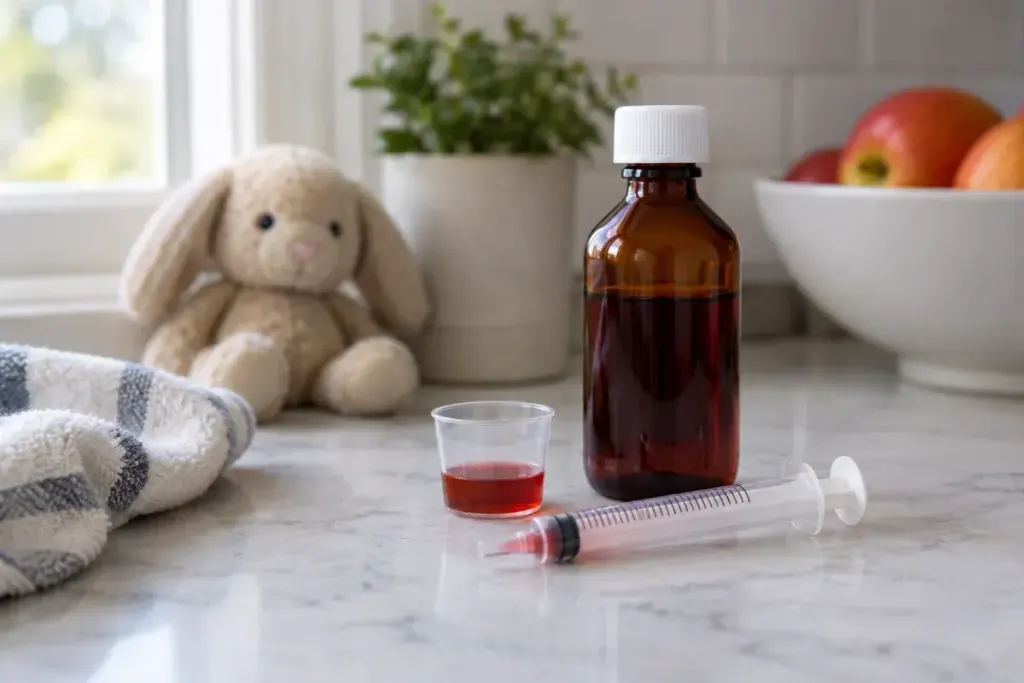
The label gives a liquid dose, but the kitchen drawer offers several different spoons. Choosing the one that looks closest turns a measured instruction into a guess.
Liquid medicines need an appropriate medicine-measuring device and clear units. The right amount depends on the prescribed or labelled instructions for that person and product; this article does not calculate an individual dose.
Read the unit and concentration together
Check the medicine name, concentration, dose, frequency and the person for whom it is intended. A bottle with a familiar name can have a different concentration from an earlier supply. Do not transfer an old volume instruction without confirming it remains correct.
The FDA’s safe medicine-use teaching material explains why household cutlery is unsuitable for measuring liquid medicines and shows purpose-made devices. A pharmacist can help choose a device whose markings match the required amount.
Ask for a demonstration when anything is unclear
Bring the bottle and device together. Ask the pharmacist to show which line to use and how to read it, then demonstrate back using their instructions. An oral dosing syringe has no needle and should be used only for its intended purpose.
If the label and device use different units, do not improvise a conversion while preparing the dose. Have the instructions clarified. Keep the supplied device with the correct medicine so similar-looking cups or syringes do not become mixed up.
Make administration traceable
Where several carers are involved, use an agreed record of what was given and when. A simple tick made immediately after administration can help avoid relying on a conversation that another person did not hear. Protect the person’s privacy and follow the care plan.
Follow any directions about shaking, food, storage and cleaning the device. Do not mix medicine into a full meal or drink unless a pharmacist or clinician says that method is appropriate; an unfinished portion can make the amount taken uncertain.
Resolve mistakes promptly
If you are unsure whether a dose was taken or believe an incorrect amount was given, contact a pharmacist, clinician or local poison service promptly for case-specific advice. Do not automatically repeat the dose. Seek emergency help for serious symptoms.
The useful routine is deliberately unhurried: correct person, correct bottle, clear instructions and a matching measuring tool. That is a better starting point than finding a spoon that merely looks about right.